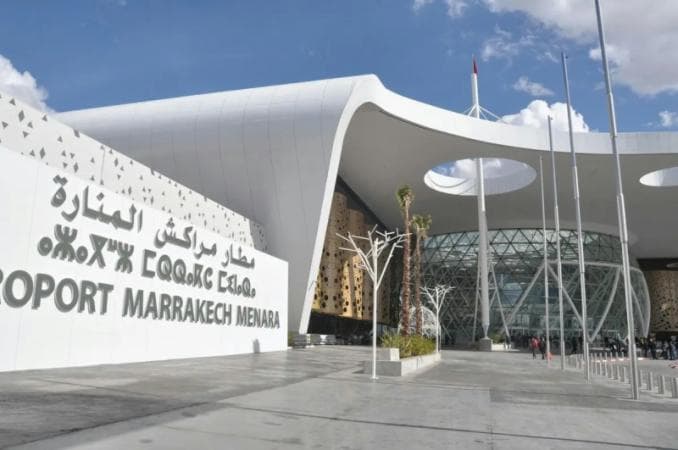
"Do I need a 4×4 to drive to the Sahara?" is the single most common question we get from tourists arriving at Marrakech Menara. The honest answer is no — for the road portion of the trip. But the reasoning matters, because some routes work better than others, and one specific decision (when to switch out of your rental car) makes the difference between a great trip and a 3,000 MAD recovery bill.
The two Sahara entries from Marrakech
Most tourists go to one of two places when they say "Sahara":
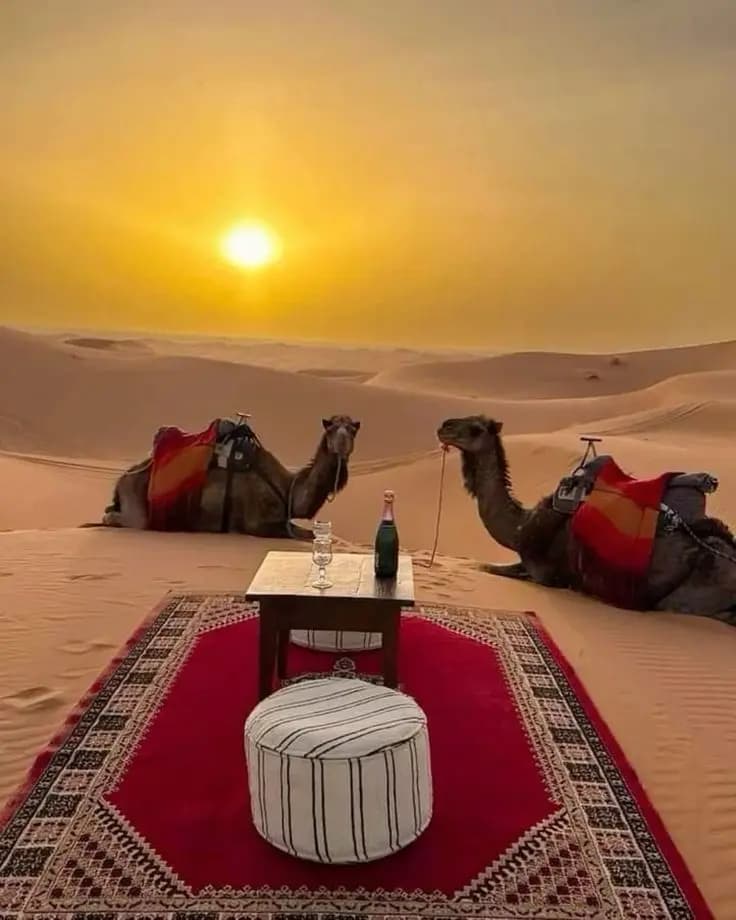
- Erg Chebbi (Merzouga), the postcard dunes — 150-metre tall sand mountains stretching to the Algerian border. 560 km east of Marrakech via Ouarzazate and Tinghir.
- Erg Chigaga (M'Hamid, beyond Zagora), the smaller and quieter dune system. 360 km south of Marrakech via Ouarzazate and Agdz.
Both are reachable on fully paved tarmac. There is no off-road driving required to get to your accommodation in either case — the camps and kasbahs sit at the edge of the dunes, accessible by paved road or short hard-packed track.
SUV vs 4×4: the real difference
A 4×4 (Toyota Hilux, Mitsubishi L200, Ford Ranger) is engineered to drive on sand — soft tyres, transfer case, low gearing, locking differentials. It costs nearly twice an SUV per day, burns 30% more fuel, and is overkill for tarmac.
An SUV (Dacia Duster, Hyundai Tucson, Renault Captur) is a tall hatchback with a more comfortable suspension and slightly higher ground clearance. It eats Moroccan tarmac all day and the suspension forgives the cracked roads through Tinghir and Erfoud.
The trick most tourists miss: when you reach Merzouga or M'Hamid, you do not drive your rental into the dunes. Your camp organiser collects you with their own 4×4 fleet at sunset, drives you to camp, and brings you back the next morning. Your rental sits in the village's guarded car park overnight (50 MAD/night, paid to the guardian). This is the standard, safe and contractually clean way to do it — and it lets you rent an SUV for the comfortable road portion instead of a 4×4 for the entire trip.
The Marrakech → Merzouga route, day by day
Realistic three-night minimum:
- Day 1: Marrakech → Aït Ben Haddou → Ouarzazate (200 km, 4 hours over Tichka pass). Sleep in a Skoura or Ouarzazate kasbah.
- Day 2: Ouarzazate → Todra Gorge → Merzouga (370 km, 5 hours). Lunch in Tinghir, walk into the gorge before continuing east. Arrive Merzouga before sunset for the camel ride into camp.
- Day 3: Sunrise in the dunes, back to Merzouga village by 9 AM. Drive back to Marrakech direct (560 km) — long but doable, or break it in Ouarzazate again.
The Marrakech → Zagora alternative
Two nights minimum:
- Day 1: Marrakech → Aït Ben Haddou → Zagora (360 km, 6 hours). Same Tichka start; turn south at Ouarzazate.
- Day 2: Sunrise in Erg Chigaga, back to Marrakech direct (360 km).
Zagora is the right pick if you have less than 4 days. The dunes are smaller (50 m versus 150 m at Merzouga) but you spend a full day less on the road, which can be the difference between a relaxed trip and a death march.
The Tichka pass, demystified
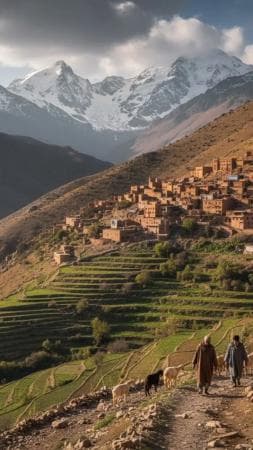
Both routes share the first 200 km — the climb over the High Atlas via the Tizi n'Tichka pass, peaking at 2,260 m. People treat it like a danger zone; it is not. Since the new bypass tunnel opened in 2023 the road is wide, two-laned and resurfaced. Allow 4 hours from Marrakech to Ouarzazate, never less. Stop at the Aït Ben Haddou ksar — UNESCO site, 30 minutes from the road.
Two real concerns on the pass:
- Trucks. Lots of them, especially Friday afternoon and Sunday evening. Do not overtake on blind sections.
- Winter snow. December to early March, the pass occasionally closes for hours after snowfall. Check the forecast and ask your hotel before leaving — the gendarmerie on Avenue Mohammed VI in Marrakech will tell you on the phone if the road is open.
Fuel, water, money
The drive is across some of the emptiest country in Morocco. Fuel stations are well-spaced on the main road (Marrakech, Tahanaout, Ouarzazate, Skoura, Tinghir, Erfoud, Merzouga) but they get rarer between Tinghir and Erfoud — top up when you cross 1/2 tank. Cash is essential outside large towns; ATMs work in Ouarzazate and Erfoud only. Bring 4–5 litres of water per person per day — the desert dehydrates you faster than you think, even with air conditioning.
What insurance to take
For a long-distance Sahara trip we strongly recommend Premium insurance (+80 MAD/day). It reduces the deductible to zero and covers:
- Tyre damage (the road past Tinghir has loose-stone shoulders).
- Bodywork from gravel hits (very common on overtakes).
- Theft cover at desert camp parking lots.
What insurance does not cover, in any contract, is sand damage from off-road driving. The contract typically voids if you drive into the dunes. This is the entire reason the camp organisers use their own vehicles for the dune transfer.
Fleet recommendation
For Marrakech → Merzouga or Marrakech → Zagora we rent out:
- Dacia Duster (4×2): 450 MAD/day. The most common Sahara-trip car in Morocco. Comfortable for two adults, modest luggage.
- Hyundai Tucson: 550–650 MAD/day. Bigger, quieter, automatic option, better for families.
- Toyota Hilux 4×4: 800 MAD/day — only worth it if you plan additional off-tarmac excursions beyond the standard tourist route. Rarely necessary.
All come with full Moroccan insurance, unlimited kilometres, and a written exception authorising travel to the southern provinces (some basic contracts limit you to within 200 km of pickup — always check).
See SUV availability or message us on WhatsApp with your travel dates and destination — we will book the right vehicle for the actual trip you are doing, not the imagined one.